How Does Modbus Work With a Smart Home Gateway?
As smart homes and intelligent buildings evolve, it is essential for various systems to interact with one another, including HVAC controllers, lighting systems, energy meters, sensors, and security devices.
Although wireless protocols like WiFi, Zigbee, and Matter are favored for consumer smart devices, numerous professional automation systems depend on Modbus due to its reliability, ease of use, and extensive industry acceptance.
A smart home gateway that supports Modbus serves as a link between conventional wired automation devices and contemporary IoT platforms, facilitating centralized control and monitoring.
What Is Modbus?
A Dependable Industrial Communication Protocol
Modbus is a communication protocol that was initially created for industrial automation and is now extensively utilized in:
- Smart buildings
- HVAC systems
- Energy management
- Industrial control
- Building automation systems
Modbus enables devices from various manufacturers to share data through a standardized communication approach.
The most common versions of Modbus include:
Modbus RTU
Utilizes:
- RS485 wiring
- Serial communication
Typical applications:
- Temperature controllers
- HVAC equipment
- Lighting controllers
- Energy meters
- Modbus TCP
Utilizes:
- Ethernet networks
- IP communication
Typical applications:
- Building management systems
- Industrial gateways
- Cloud-connected automation
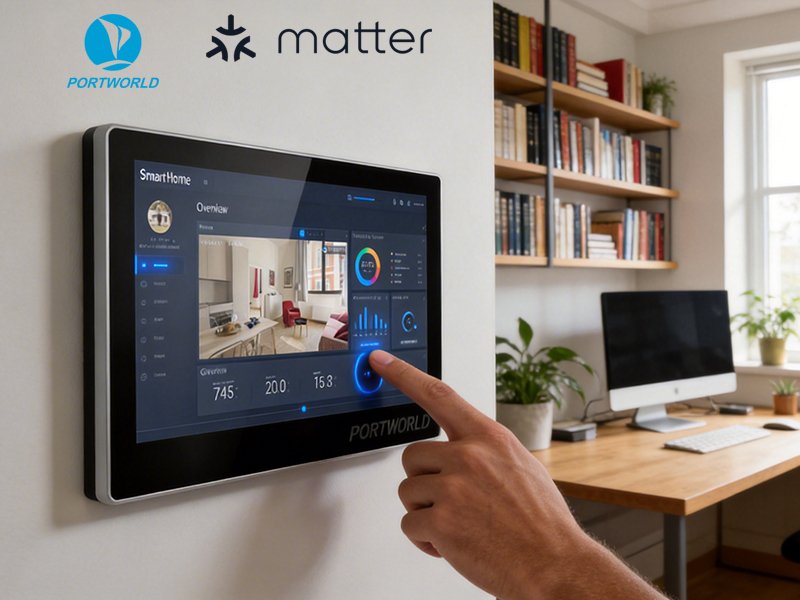
smart home control panel
How Does Modbus Function with a Smart Home Gateway?
A smart home gateway serves as a communication link between Modbus devices and smart home applications.
The fundamental structure:
Modbus Devices → Smart Home Gateway → Mobile Application / Cloud Platform / Touch Panel
For instance:
- An HVAC controller communicates via RS485 Modbus.
- The smart gateway acquires temperature and operational data.
- The gateway translates Modbus data into a format suitable for IoT.
- Users manage the HVAC system through a touchscreen interface or mobile application.
Modbus Integration Procedure
1. Connecting Modbus Devices
The gateway interfaces with automation equipment through:
- RS485 port
- Ethernet port
Commonly connected devices include:
- Air conditioning controllers
- Smart meters
- Lighting modules
- Temperature sensors
- Curtain motors
2. Reading and Writing Device Information
Modbus devices maintain data in registers.
The gateway is capable of:
Reading Data
Examples:
- Current temperature
- Power consumption
- Light status
- Device operating mode
Sending Commands
Examples:
- Set HVAC temperature
- Turn lights ON/OFF
- Adjust fan speed
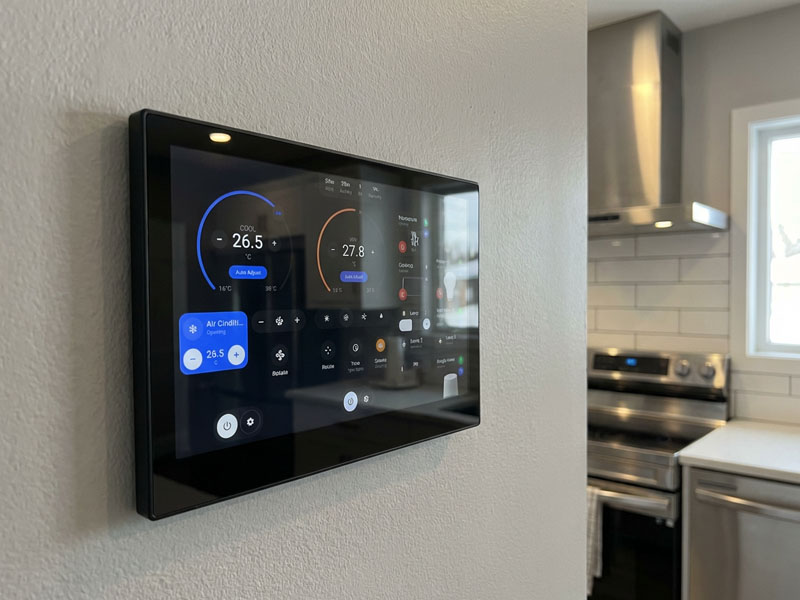
smart touch control panel8
3. Transforming Modbus Data into Smart Home Commands
Conventional Modbus devices lack direct connectivity to applications or cloud services.
The gateway serves to translate communication protocols.
Example:
User Action:
A touchscreen panel adjusts the room temperature to 24°C
↓
Smart Gateway:
Translates the command into Modbus instructions
↓
HVAC Controller:
Receives the command and modifies the temperature
Why Implement Modbus in Smart Home Gateways?
1. Reliable Wired Communication
In contrast to wireless connections, Modbus offers:
- Dependable communication
- Minimal interference
- Extended transmission range
This makes it suitable for:
- Villas
- Hotels
- Office buildings
- Commercial projects
2. Extensive Device Compatibility
Numerous automation products are already compatible with Modbus.
Examples include:
- HVAC systems
- Air handling units
- Lighting controllers
- Energy meters
- Industrial equipment
This enables smart gateways to incorporate existing systems without the need for hardware replacement.
3. Reduced Deployment Expenses
For extensive structures, wired Modbus networks can simplify the installation process.
Advantages:
- Minimized wireless interference
- Streamlined wiring configuration
- Facilitated maintenance
4. Facilitates Building Automation
Modbus is frequently utilized in:
- Intelligent hotels
- Office automation
- Commercial facilities
- Energy management systems
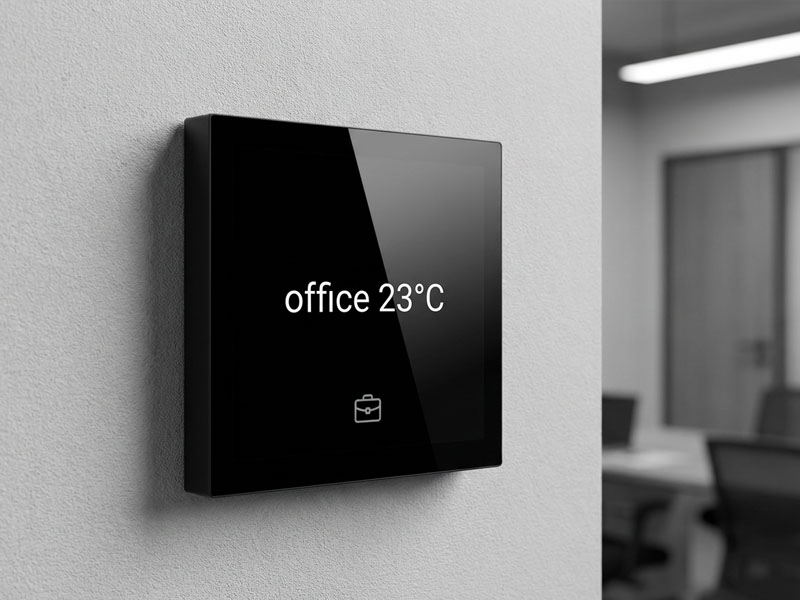
smart touch control panel-2
Modbus vs Zigbee/WiFi in Smart Home Automation
| Feature | Modbus | Zigbee/WiFi |
|---|---|---|
| Communication | Wired | Wireless |
| Reliability | Very high | Depends on environment |
| Distance | Long distance | Limited by signal |
| Power Consumption | Low | Low to medium |
| Best For | HVAC, BMS, industrial devices | Sensors, consumer devices |
| Installation | Requires wiring | Easier deployment |
In professional automation projects, Modbus and wireless protocols are often used together.
Example:
Smart Touch Panel
↓
Smart Gateway
↓
Modbus HVAC + Zigbee Sensors + WiFi Devices
Intelligent Control Panels Featuring Modbus Compatibility
Contemporary intelligent control panels frequently incorporate Modbus communication to interface with advanced automation systems.
Common interfaces include:
- RS485
- Ethernet
- PoE
- WiFi
- Bluetooth
Use Cases:
- Smart home management
- Hotel room automation
- Meeting room oversight
- Building energy management
- Portworld Intelligent Control Panel Solutions
Portworld offers advanced touch panels and integrated HMI solutions that cater to professional automation needs.
YC-SM43P ESP32-S3 Intelligent HMI Panel
Specifications:
- ESP32-S3 processor
- LVGL graphical user interface
- RS485 communication
- Support for Ethernet and PoE
- Compact design for wall mounting
Ideal for:
- IoT gateways
- Smart switches
- Building automation management
Android/Linux Smart Control Panels
Specifications:
- RK3566/RK3568 processors
- Compatibility with Android/Linux
- Touchscreen interface
- RS485 and Ethernet connectivity
- Custom software development options
Ideal Applications:
- HVAC control systems
- Lighting management solutions
- Smart building technologies
A smart home gateway featuring Modbus support bridges the gap between traditional automation devices and contemporary IoT systems.
By transforming Modbus data into intelligent control commands, these gateways enable users to oversee HVAC, lighting, energy management systems, and various other devices via touchscreen panels or mobile applications.