A Complete Guide to Custom Digital Signage Display Manufacturing
As digital signage continues to proliferate in sectors such as retail, transportation, healthcare, hospitality, smart offices, and industrial applications, an increasing number of businesses are seeking tailored digital signage displays rather than conventional commercial screens.
A bespoke digital signage solution enables companies to develop products that align with their unique application needs, brand identity, and deployment context. Every aspect of the display, from screen dimensions and hardware setup to software integration and enclosure design, can be fine-tuned for optimal performance.
Nevertheless, creating a custom digital signage product entails more than merely choosing a display panel. It encompasses product design, hardware development, software customization, manufacturing, testing, and ongoing support.
This guide outlines the entire process of manufacturing custom digital signage displays and highlights the considerations businesses should keep in mind when collaborating with an OEM/ODM manufacturer.
Why Opt for Custom Digital Signage Displays?
While standard digital signage products can fulfill basic advertising requirements, numerous commercial projects necessitate specialized solutions.
For instance:
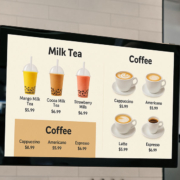
- A supermarket might require ultra-wide stretched displays for shelf-edge advertising.
- A hospital could need touchscreen queue management terminals.
- A hotel may seek interactive information kiosks.
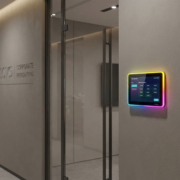
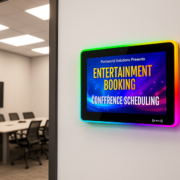
- A smart office might demand PoE meeting room booking panels.
- An outdoor project may necessitate high-brightness waterproof displays.
Custom manufacturing empowers businesses to optimize the display according to:
- Installation environment
- User interaction needs
- Software platform
- Branding requirements
- Performance specifications
This approach fosters the creation of a more effective and competitive product.
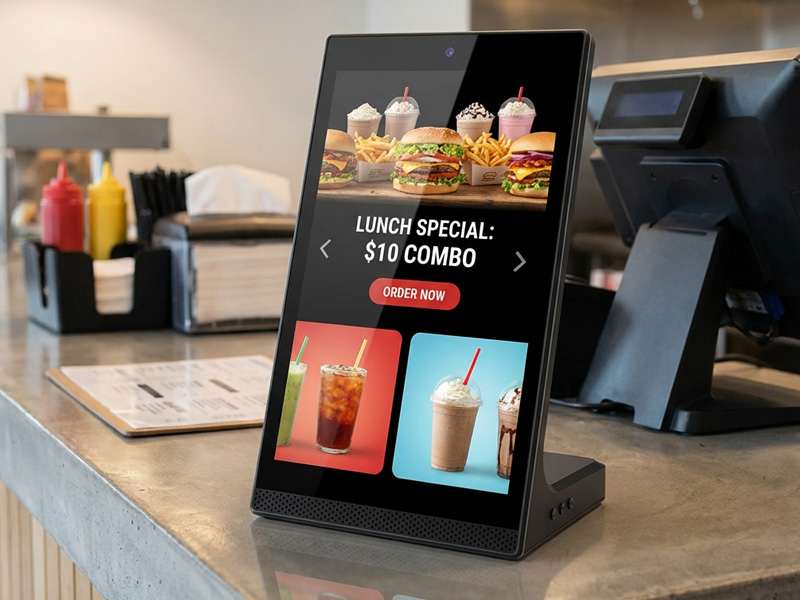
YC-L106 10.1-inch L-Shaped Digital Signage Display
Step 1: Establish Product Specifications
The initial phase of custom digital signage production involves establishing the project specifications.
Typically, a manufacturer will assess:
Application Context
It is crucial to comprehend the intended usage of the display.
Common use cases encompass:
- Retail advertising
- Supermarket shelf displays
- Interactive kiosks
- Transportation information systems
- Hospital information displays
- Meeting room management
- Industrial control panels
Various environments necessitate distinct designs.
For instance:
- Outdoor displays require high brightness and protection against the elements.
- Public kiosks demand robust structures.
- Interactive displays must ensure dependable touch functionality.
- Display Dimensions and Configuration
Clients have the option to customize:
- Screen size
- Aspect ratio
- Portrait or landscape orientation
- Wall-mounted design
- Floor-standing structure
- Desktop form factor
- Flush-mount installation
A qualified manufacturer can provide recommendations for the optimal structure based on installation needs.
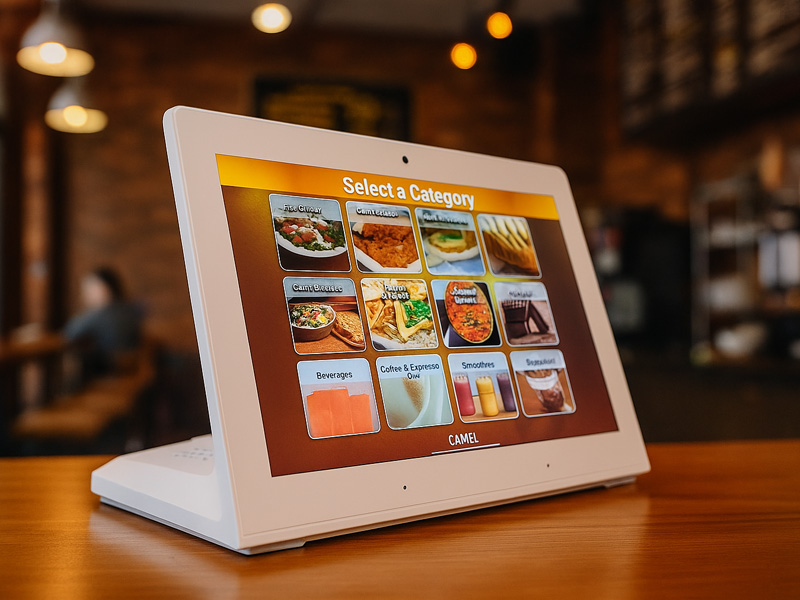
L-Shape Interactive Touch Screen Digital Signage
Step 2: Choose Hardware Configuration
The selection of hardware plays a crucial role in determining the performance and reliability of a digital signage display.
Processor Platform
The processor must align with the specific application requirements.
For basic advertising playback:
Entry-level processors might suffice.
For more advanced applications:
- AI interaction
- Multi-screen playback
- 4K video
- Smart retail applications
Higher-performance platforms are recommended.
Portworld’s custom digital signage solutions are compatible with Rockchip platforms, which include:
- RK3566
- RK3568
- RK3576
- RK3588
These platforms offer versatile performance options suitable for commercial displays and intelligent terminals.
Memory and Storage
Various applications necessitate different configurations.
Common choices consist of:
- 2GB / 4GB / 8GB RAM
- 16GB / 32GB / 64GB / 128GB storage
For straightforward advertising playback, lower configurations may be adequate.
For interactive applications that utilize multiple apps, increased memory and storage enhance system stability.
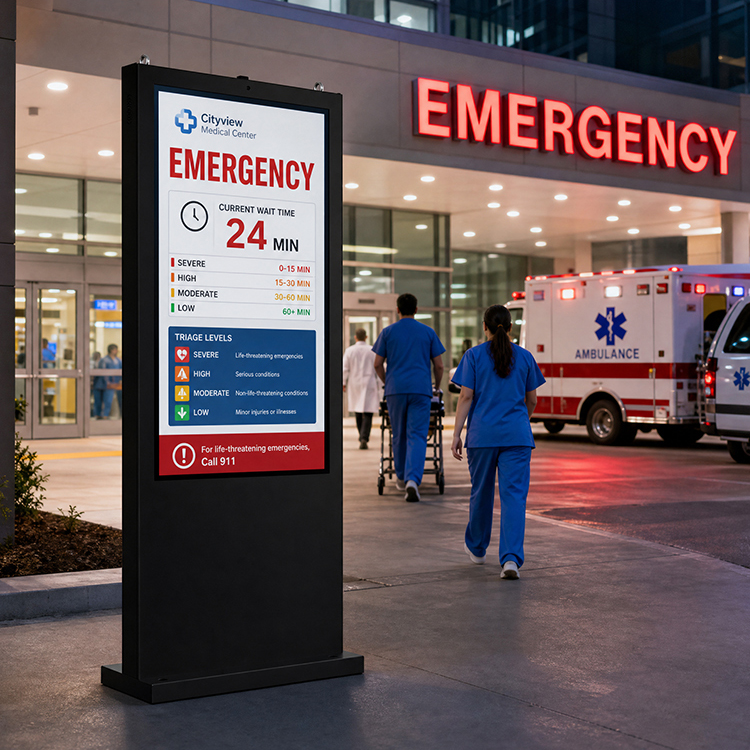
YC-5520FL-IP Floor Standing Digital Signage
Operating System Customization
Custom digital signage displays are compatible with various operating systems, such as:
- Android
- Linux
- Debian
- Windows
Software customization may encompass:
- Custom launcher
- Firmware modification
- Application pre-installation
- CMS integration
- API and SDK support
This capability enables businesses to seamlessly incorporate displays into their existing software infrastructure.
Step 3: Customize Display Features
The display can be tailored to suit the specific environment.
Brightness Options
The choice of brightness is contingent upon the installation conditions.
Typical requirements include:
- 300–500 nits: Indoor applications
- 700–1000 nits: Window-facing displays
- 1500+ nits: Outdoor environments
High-brightness displays guarantee that content remains visible even in bright lighting conditions.
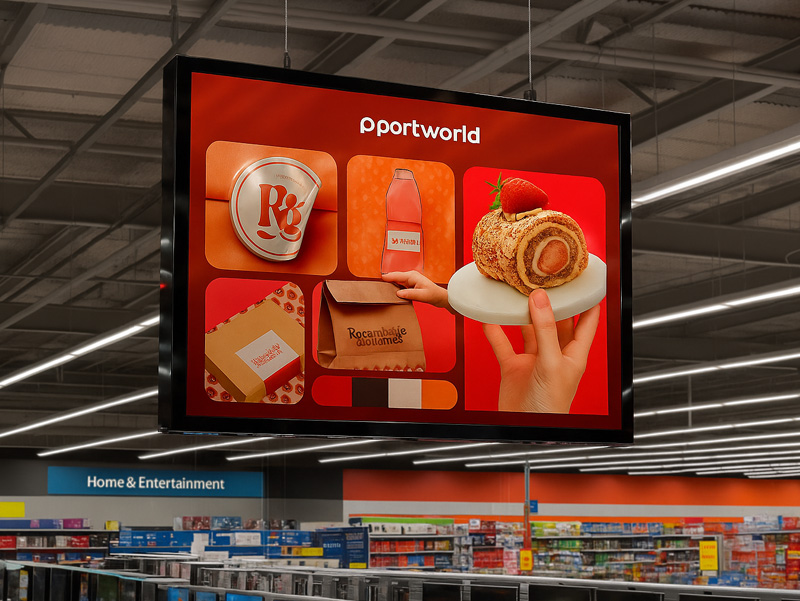
ultra thin hanging advertising screen
Touchscreen Integration
Interactive digital signage frequently necessitates touch functionality.
Customization options comprise:
- Capacitive touch
- Infrared touch
- Multi-touch support
- Custom touch sizes
Applications include:
- Self-service kiosks
- Wayfinding terminals
- Visitor registration
- Smart retail displays
Optical Bonding and Protective Glass
In challenging environments, manufacturers have the option to incorporate:
- Optical bonding
- Tempered glass
- Anti-glare coating
- IK10 protection
These enhancements significantly boost durability and visual performance.
Step 4: Incorporate Functional Modules
Contemporary digital signage displays frequently feature supplementary hardware modules.
Typical customization options consist of:
PoE Support
Power over Ethernet facilitates the transmission of power and network data through a single cable.
It is commonly utilized for:
- Meeting room booking panels
- Access control displays
- Smart building terminals
- Camera Integration
Front-facing cameras can enable:
- Face recognition
- Video communication
- AI interaction
- NFC/RFID Modules
These are employed for:
- Access control
- Authentication
- Smart payment systems
- LED Status Indicators
RGB LED frames or light bars can indicate:
- Room availability
- Advertising effects
- Device status
Step 5: Industrial Design and Enclosure Development
The visual design is a crucial aspect of commercial digital signage.
Manufacturers have the ability to customize:
- Metal casings
- Plastic enclosures
- Acrylic frames
- Logo printing
- Mounting structures
For instance, Portworld offers tailored digital signage solutions that include:
- Wall-mounted advertising displays
- Floor-standing kiosks
- Stretched bar displays
- L-shaped desktop terminals
- Flush-mounted panels
The design of the enclosure is optimized according to the installation environment and product positioning.
Step 6: Prototype Development and Testing
Prior to mass production, professional manufacturers typically create prototypes.
Prototype testing encompasses:
- Hardware verification
- Display testing
- Touch functionality testing
- Software compatibility testing
- Thermal testing
- Network testing
This phase is essential for identifying potential issues before large-scale manufacturing.
Step 7: Mass Production and Quality Control
Once the prototype is approved, the product proceeds to mass production.
A dependable digital signage manufacturer should conduct:
- Component inspections
- Assembly quality control
- Aging tests
- Performance evaluations
- Final inspections
Commercial displays are often required to function continuously, making quality control imperative.
Step 8: Certification and Global Delivery
For international markets, customized digital signage products may need certifications such as:
- CE
- FCC
- RoHS
Manufacturers can also provide support for:
- Customized packaging
- User manuals
- Branding materials
- Logistics assistance
This facilitates customers in launching products on a global scale.
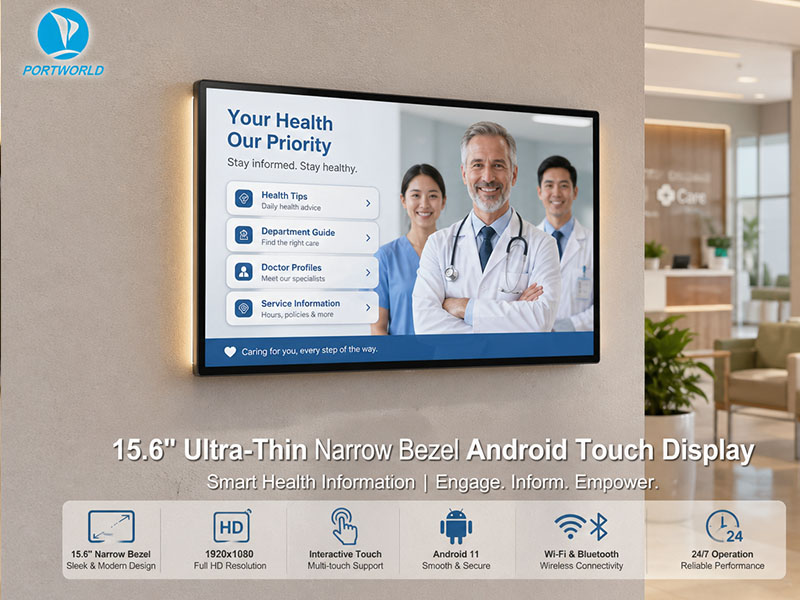
Wall-Mounted Digital Signage
Why Opt for Portworld for Custom Digital Signage Manufacturing?
Portworld offers comprehensive OEM/ODM digital signage manufacturing services for partners worldwide.
With robust R&D and production capabilities, Portworld facilitates:
- Custom digital signage displays
- Android touch panels
- Commercial advertising players
- Outdoor digital signage kiosks
- Meeting room booking displays
- Industrial touchscreen solutions
The customization options encompass:
- Hardware design
- PCBA development
- Android/Linux customization
- Touchscreen integration
- Camera and NFC/RFID modules
- PoE solutions
- Custom enclosure design
- CMS integration
From the initial concept and prototype development to large-scale production, Portworld assists businesses in creating dependable digital signage solutions across various industries.
The manufacturing of custom digital signage displays is a comprehensive process that integrates hardware engineering, software development, industrial design, and production expertise.
Choosing the right manufacturing partner can enable businesses to develop displays that are more reliable, functional, and competitive.