Commercial Digital Signage Display Manufacturer
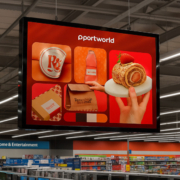
The use of digital signage has changed dramatically over the past few years. What used to be a straightforward substitute for printed advertising boards has grown into a smart communication tool that links businesses with customers, employees, and the public.
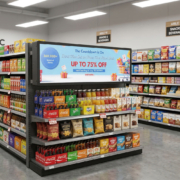
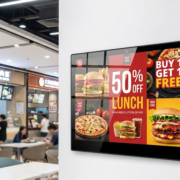
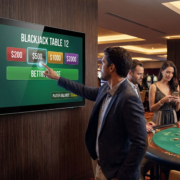
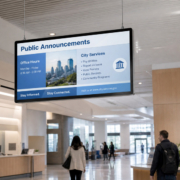
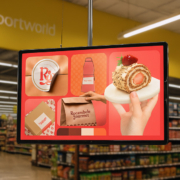
These digital signage screens are now common in many settings—retail stores and restaurants, transportation hubs, offices, and industrial facilities. They’re used for everything from advertising and delivering information to enabling self-service and supporting real-time communication.
For businesses planning larger deployments, selecting the right commercial digital signage display manufacturer involves much more than just finding a screen supplier. It also means finding a true partner—one with strong hardware engineering skills, the ability to customize software, proven production experience, and the capability to support different types of real-world application scenarios.
The Evolution of Commercial Digital Signage Displays
In the past, traditional advertising displays were mostly designed to show images and videos. Today, commercial digital signage systems are far more advanced.
Modern displays often need to include support for features such as:
- Cloud-based content management
- Remote device monitoring
- Touch interaction
- Smart sensors
- AI applications
- IoT connectivity
- Industrial communication protocols
For example, a retail brand may need hundreds of synchronized advertising screens across multiple locations. Meanwhile, a transportation project might require rugged displays that can run continuously in public spaces.
Because these needs vary so much, more and more companies are turning to manufacturers that can offer flexible, customized solutions.
Floor Standing Digital Signage
What Sets a Professional Digital Signage Manufacturer Apart?
A professional commercial digital signage manufacturer offers more than just finished screens. The ability to design, customize, and continually improve the hardware is becoming more and more important.
Here are the key capabilities to look for:
- A Full Product Range for Different Use Cases
- Different commercial settings call for different types of displays.
A dependable manufacturer should offer solutions such as:
Wall-Mounted Digital Signage Displays
These are commonly used in:
- Retail stores
- Shopping malls
- Hotels
- Corporate offices
They can be equipped with:
- Android operating systems
- Linux platforms
- Touchscreen support
- Remote CMS management
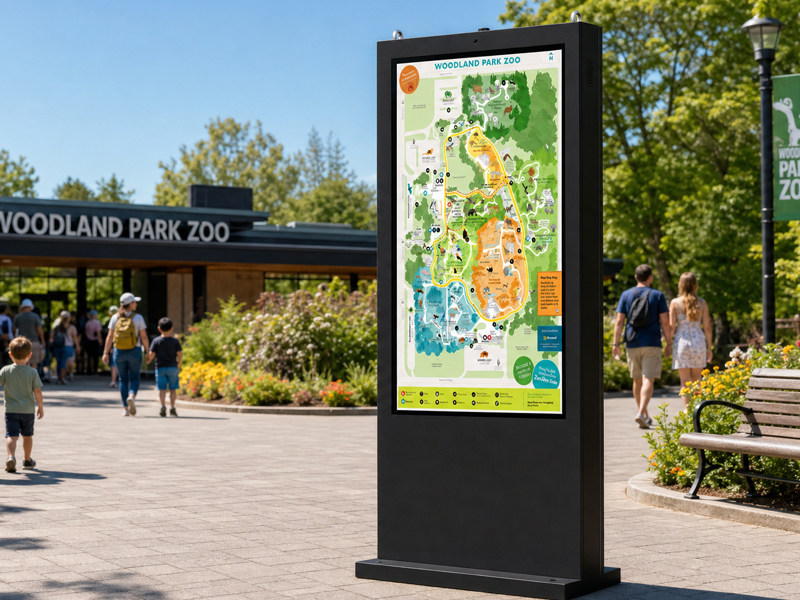
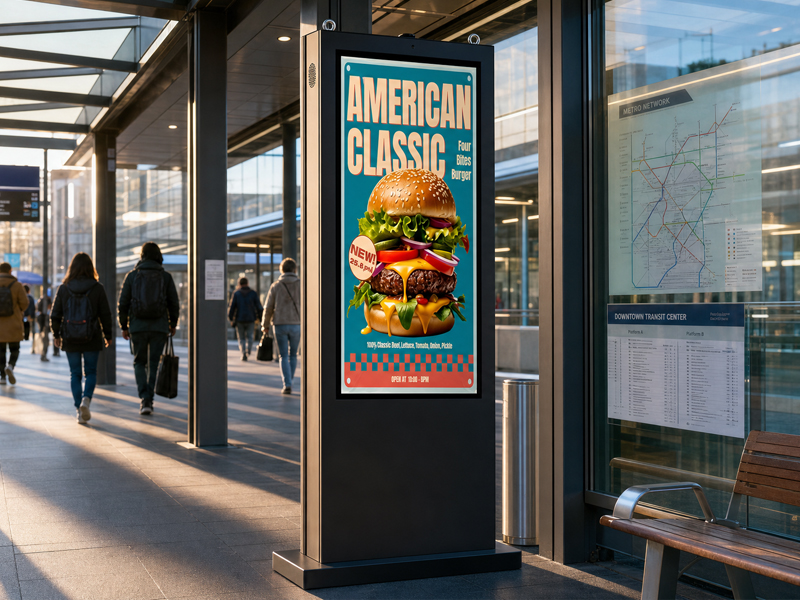
Floor-Standing Digital Signage Kiosks
Built for busy, high-traffic locations like:
- Airports
- Subway stations
- Tourist attractions
- Public service areas
These kiosks can be customized with features such as:
- High-brightness displays
- Touch interaction
- Cameras
- NFC modules
- Payment systems
Floor Standing Digital Signage
Outdoor Digital Signage Displays
Outdoor installations face harsher conditions, so they need additional protection, such as:
- High-brightness panels
- IP65/IP66 waterproof design
- IK10 anti-vandal glass
- A wide temperature operating range
Because of this, these displays are commonly used for:
- Smart city initiatives
- Outdoor advertising
- Transportation information systems
Stretched Bar Digital Signage Displays
Ultra-wide displays open up new options for applications with limited space.
Typical scenarios include:
- Shelf-edge advertising in supermarkets
- Restaurant counter menu boards
- Elevator display screens
- Transportation signage
Hardware Engineering Capability Is Critical
For commercial projects, the quality of the hardware design has a direct effect on product reliability.
A reliable manufacturer should be able to customize:
Computing Platforms
Different applications demand different processing performance.
Commercial digital signage solutions may adopt embedded processors such as:
- RK3566
- RK3568
- RK3576
- RK3588
With these choices, performance can scale from basic media playback to AI-supported interactive use cases.
Display Configuration
Manufacturers should provide flexibility in:
- Screen size
- Resolution
- Brightness
- Touch technology
- Installation method
For example, an indoor retail display might only require normal brightness, while an outdoor advertising kiosk generally needs 3000 nits sunlight-readable capability.

YC-5520FL-IP Floor Standing Digital Signage
Interface Integration
In many professional digital signage projects, extra interface and hardware integration is needed, including:
- RS232
- RS485
- Ethernet
- PoE
- USB
- NFC/RFID
- Cameras
- Sensors
This makes it easier for the displays to work together with larger business systems.
Android and Linux Digital Signage Solutions
When choosing a manufacturer, operating system flexibility is also an important consideration.
Android Commercial Displays
Android-based digital signage is widely used because it offers:
- Fast application deployment
- Touch-friendly interfaces
- Easy CMS integration
- A large developer ecosystem
It’s commonly used for:
- Interactive kiosks
- Advertising displays
- Meeting room panels
- Smart retail terminals
Linux Commercial Displays
Linux-based solutions are often preferred for industrial and embedded applications.
Key benefits include:
- Reliable stability
- Deep customization
- Support for long-term deployments
- Hardware-level optimization
Typical use cases are:
- Industrial displays
- Smart infrastructure
- Specialized embedded systems
A manufacturer that can support both platforms can offer more suitable solutions for different industries.
Portworld: Commercial Digital Signage Display Manufacturer and OEM/ODM Partner
Portworld specializes in commercial touchscreen systems, digital signage hardware, smart control panels, and embedded solutions.
Unlike basic display suppliers, Portworld offers integrated hardware and software development support to help deliver customized projects.
Its commercial digital signage solutions include:
- Android digital signage displays
- Linux industrial displays
- Interactive touchscreens
- Outdoor advertising kiosks
- Smart meeting room panels
- Embedded computing platforms
With dedicated in-house R&D and manufacturing capabilities, Portworld supports customers from the first product idea through to mass production.
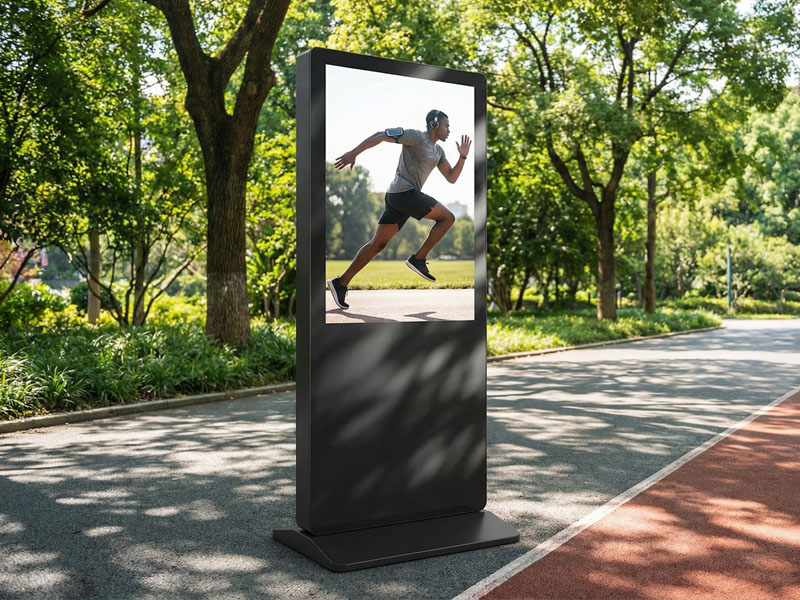
YC-5520FL
55″ Floor Standing Digital Signage
OEM/ODM Customization for Digital Signage Brands
Many businesses prefer to create their own custom display products instead of relying on standard models.
Portworld provides OEM/ODM services that include:
Hardware Customization
- Custom PCBA development
- Mainboard design
- Display structure customization
- Touchscreen integration
- Processor selection
- Interface expansion
Software Customization
- Android firmware customization
- Linux/Debian adaptation
- UI branding
- CMS integration
- Application deployment
Manufacturing Support
- Prototype development
- Mass production
- Quality control
- CKD/SKD assembly
- Spare parts supply
This helps distributors, system integrators, and global brands develop differentiated digital signage products.
How to Choose the Right Digital Signage Manufacturer
Before selecting a supplier, companies should carefully review:
Engineering Experience
Can the manufacturer tailor both the hardware and software to match the specific needs of the project?
Production Capability
Are they able to handle everything from prototypes through to large-scale production runs?
Long-Term Support
After installation, will they still provide access to components, firmware updates, and technical services?
Industry Understanding
Does the manufacturer truly understand what’s required for commercial settings and real-world usage?
A dependable partner should offer solutions that stay consistent and reliable across the full product lifecycle.
A professional commercial digital signage display manufacturer is more than just a company that produces screens. The right partner should bring together display technology, embedded hardware development, software customization, and manufacturing know-how.
As digital signage keeps evolving toward smarter and more connected applications, businesses need solutions that are flexible enough to work across different industries and deployment environments.