Multi-functional Motherboard for Smart Factory Robots
In today’s fast-paced world, industries are adopting automation to improve productivity, reduce errors, and enhance the overall efficiency of their operations. At the heart of this technological shift is the smart factory, where robots, machines, and systems communicate seamlessly to create intelligent, flexible production lines. The motherboard plays a pivotal role in ensuring that smart factory robots can perform their tasks with precision, speed, and reliability.
In this article, we will explore how a multi-functional motherboard is the backbone of smart factory robots, enabling them to carry out tasks such as assembly, packaging, quality control, and inventory management. Additionally, we will dive into the features, advantages, and key aspects of the multi-functional motherboard that make it an ideal solution for industrial automation.
rk3588 motherboard
The Role of Motherboards in Smart Factory Robots
A motherboard serves as the central component of a robot’s electronic system, connecting all other parts such as sensors, processors, actuators, and communication modules. In the context of smart factories, the motherboard manages complex interactions between different robotic systems, enabling robots to work autonomously, communicate with each other, and adapt to changing conditions in the factory environment.
Motherboards for smart factory robots are designed with specific requirements in mind, including high processing power, robust connectivity, compatibility with industrial sensors, and the ability to support real-time data processing. These features are crucial for ensuring that robots can efficiently perform tasks such as:
- Object Handling and Assembly: Robots equipped with specialized end-effectors need fast, reliable processing and control systems to handle objects, perform assembly tasks, and operate in high-speed production lines.
- Quality Control and Inspection: Robots equipped with vision systems or AI-driven cameras can analyze the quality of products and ensure they meet strict industry standards.
- Inventory and Material Handling: Robots in smart factories must communicate with warehouse management systems to track inventory, move items, and manage logistics with precision.
- Collaborative Manufacturing: Smart factory robots often work alongside human workers in a collaborative environment. The motherboard ensures safe interaction, real-time communication, and seamless collaboration between humans and robots.
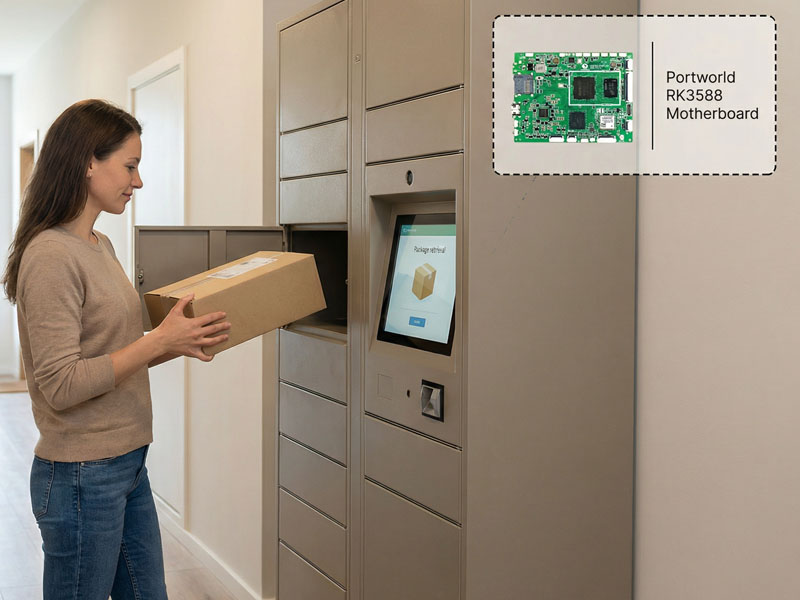
rk3588 motherboard
Key Features of a Multi-functional Motherboard for Smart Factory Robots
High-Performance Processors
- A multi-functional motherboard for smart factory robots needs to be powered by high-performance processors, such as the RK3566, RK3568, or RK3588 series. These processors provide the computing power needed to run complex algorithms, process sensor data, and control robot movements in real-time.
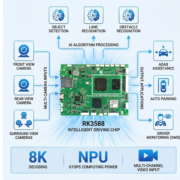
- The RK3588 processor, for example, supports AI processing and machine vision, enabling robots to detect defects, recognize objects, and make real-time decisions based on the environment.
Real-Time Data Processing
- Real-time decision-making is crucial in a factory environment. A multi-functional motherboard with integrated AI and machine learning capabilities ensures that robots can process data and act instantly without delays.
- This feature is especially important for robots working on assembly lines, as they need to respond to changes in the production process immediately to maintain high throughput.
Connectivity and Communication
- Smart factory robots must communicate efficiently with each other, as well as with other systems like warehouse management systems (WMS) and enterprise resource planning (ERP) software. A multi-functional motherboard includes multiple connectivity options such as Ethernet, Wi-Fi, Bluetooth, Zigbee, and RS485 for seamless communication.
- Additionally, PoE (Power over Ethernet) capability allows the motherboard to receive both power and data through a single cable, reducing the need for additional power supplies and simplifying the installation process.
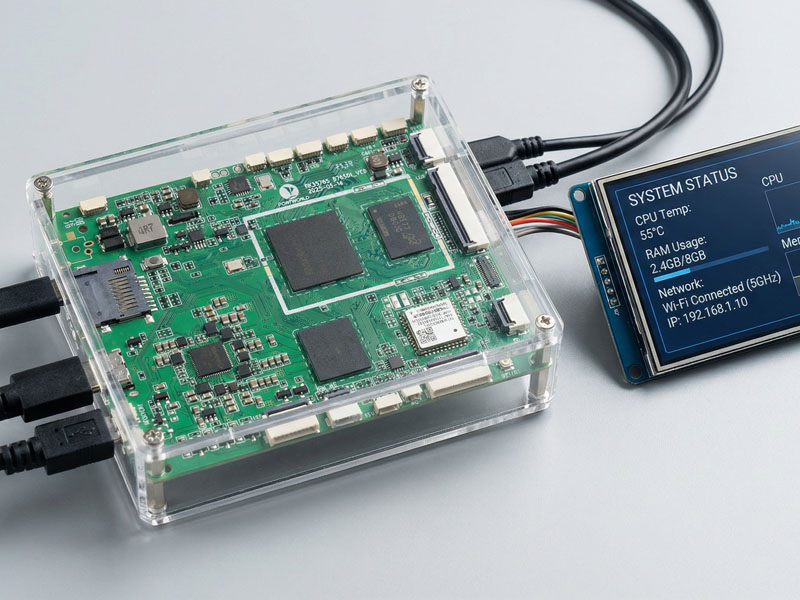
rk3576 motherboard
Industrial I/O Ports and Expansion
- A multi-functional motherboard for robots needs to support a wide variety of industrial I/O ports, including USB, GPIO, UART, CAN bus, and RS232. These interfaces enable the motherboard to connect with sensors, actuators, cameras, and other devices in the smart factory.
- M.2 and PCIe slots allow for expansion, enabling the integration of additional modules such as vision systems, AI accelerators, or motion controllers to enhance the robot’s capabilities.
AI and Machine Vision Integration
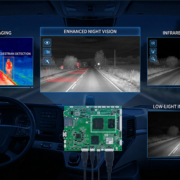
- AI and machine vision are becoming an integral part of smart factory robots. A motherboard with an embedded NPU (Neural Processing Unit), like the RK3588 or RK3576, allows robots to perform real-time image recognition, defect detection, and object classification tasks with high accuracy.
- These capabilities enable robots to ensure high product quality by identifying defects on the assembly line and performing automated inspection tasks.
Power Efficiency and Low Latency
- Since robots in smart factories are often expected to run continuously, power efficiency is a key consideration when selecting a motherboard. A low-power motherboard helps reduce operational costs and ensures the robot’s longevity.
- Furthermore, low-latency communication between the robot’s components ensures smooth operations and rapid responses to changes in the environment.
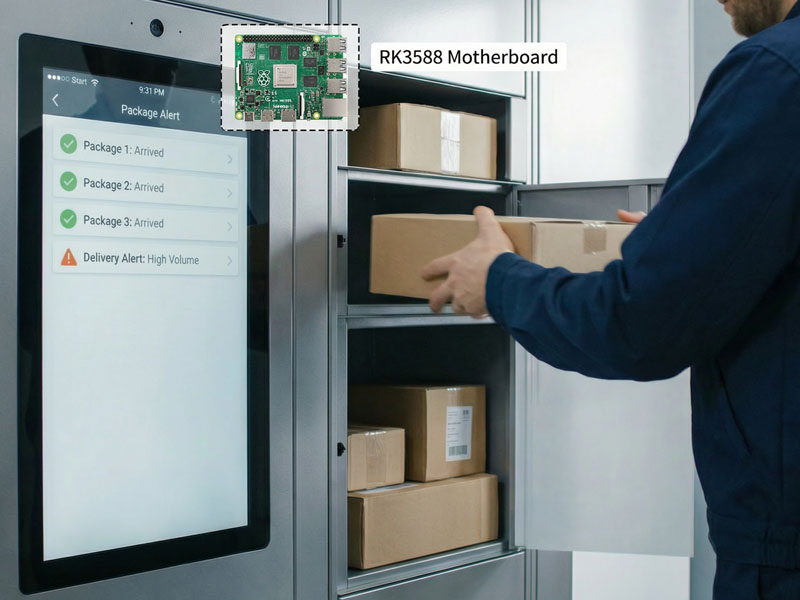
rk3576 motherboard
Portworld’s Multi-functional Motherboards for Smart Factory Robots
Portworld provides a range of multi-functional motherboards designed for industrial and robotic applications. These motherboards are engineered to meet the demanding requirements of smart factory robots, offering robust performance, flexibility, and scalability. Here are some of the key products from Portworld:
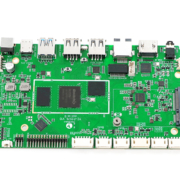
- The YC-P3576 is powered by the RK3576 processor, featuring a quad-core ARM Cortex-A55 CPU. This mainboard is designed for industrial applications, offering extensive I/O connectivity, AI support, and real-time processing capabilities for robotics applications.
- Powered by the RK3576S processor, the YC-P76S01 offers high-performance capabilities with machine vision and AI integration. It’s ideal for applications in automation, robotics, and quality control systems in smart factories.
P3506 Smart Display & Control Core
- The P3506 is a lightweight and compact control core, designed for HMI (Human-Machine Interface) systems. It’s perfect for integrating with robotic systems in smart factory environments, offering a full control interface and visual display.
P6601 Smart Mainboard
- This mainboard features the RK3566 processor, offering reliable performance for various robotic applications, including automation, material handling, and collaborative robots.
YC-SM41P, YC-SM55P Smart Control Panels
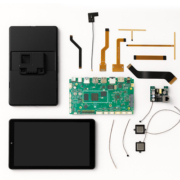
- These panels are designed to serve as interactive control hubs for smart factory robots. They integrate seamlessly with robots and automation systems, allowing operators to monitor and control robotic operations with ease.
In the evolving world of smart factories, the role of smart robots in driving automation and efficiency cannot be overstated. A multi-functional motherboard is crucial in enabling robots to perform tasks autonomously, communicate with other systems, and adapt to changing environments. Portworld offers high-performance motherboards with integrated AI, machine vision, and real-time processing capabilities, making them the ideal choice for smart factory robots.
Whether you’re developing robots for assembly, inspection, material handling, or other automation tasks, Portworld’s motherboards provide the reliability, flexibility, and performance needed to succeed.