Rockchip RK3568 vs RK3566 in Smart Panels
In the world of smart panels, whether for smart homes, industrial automation, or commercial displays, the choice of processor plays a crucial role in determining performance, efficiency, and capabilities. Among the most popular options for these applications are the Rockchip RK3568 and RK3566 processors. Both are powerful chips from Rockchip’s lineup, offering excellent performance for embedded systems, but they have distinct features that make each of them ideal for specific use cases.
Let’s break down the differences and strengths of RK3568 and RK3566 for smart panel applications.
1. Performance: RK3568 vs RK3566
RK3568:
The RK3568 is a more powerful, high-performance processor. It features a quad-core ARM Cortex-A55 CPU running at up to 2.0 GHz and integrates a Mali-G52 GPU, making it ideal for applications that require substantial graphical performance. With an NPU capable of 1 TOPS (Tera Operations Per Second), the RK3568 excels in AI tasks like facial recognition, voice command processing, and real-time data analysis. Its higher performance is beneficial in smart panels used in commercial displays, AI-driven interactive kiosks, and advanced industrial control panels where responsiveness and complex processing are required.
RK3566:
The RK3566 is a slightly lower-tier processor but still highly capable, featuring a quad-core Cortex-A55 CPU clocked up to 1.8 GHz. Its Mali-G52 GPU and 1 TOPS NPU offer good performance for applications such as smart home control panels, digital signage, and simple interactive panels. While the RK3566 doesn’t offer the same raw power as the RK3568, it’s more than capable for everyday use cases where performance requirements aren’t as intense.
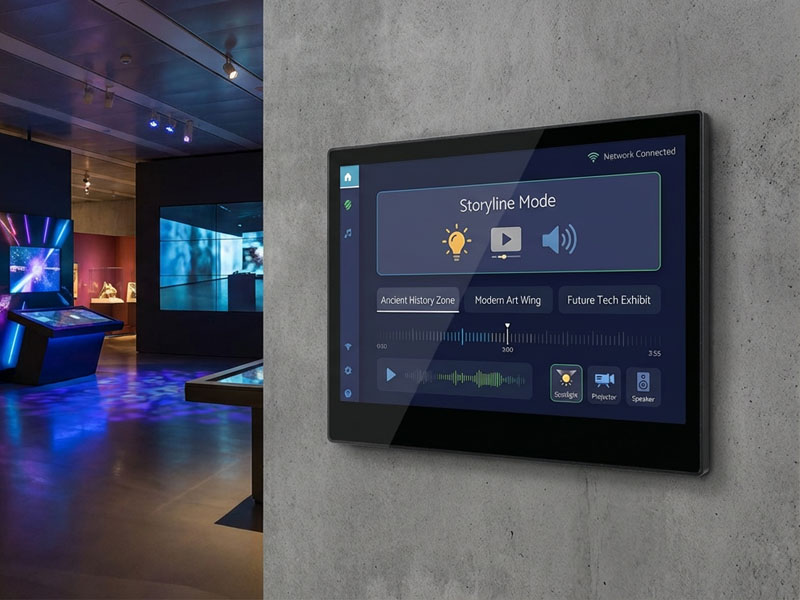
smart control panel
Verdict:
If your smart panel needs heavy AI workloads or intensive graphical rendering, the RK3568 is the better choice. For lighter applications, the RK3566 provides a perfect balance of performance and efficiency at a lower cost.
2. Power Efficiency: RK3568 vs RK3566
RK3568:
The RK3568 is designed with a balance between high performance and power efficiency. While it’s slightly more power-hungry than the RK3566, its energy consumption remains within acceptable limits for commercial applications, especially when considering its higher processing power and AI capabilities. This makes the RK3568 suitable for smart panels that need to run continuously without significant battery drain, such as smart hotel panels or industrial terminals.
RK3566:
The RK3566 is optimized for lower power consumption, making it ideal for smart home control panels or lightweight commercial signage. Its 22nm architecture ensures that it consumes less energy, which is critical for applications that require battery-powered solutions or need to operate in environments where energy conservation is a priority.
Verdict:
For power-sensitive environments like smart home systems or energy-efficient digital signage, the RK3566 shines with its lower power consumption. The RK3568 may be more suited for applications where performance is prioritized over power efficiency, such as AI-driven commercial displays or intelligent automation systems.

YC-SM14P-smart control panel
3. Connectivity: RK3568 vs RK3566
RK3568:
The RK3568 supports multiple connectivity options, including Gigabit Ethernet, Wi-Fi 6, Bluetooth 5.0, and USB 3.0. These features make it perfect for smart panels that need fast data transfer, seamless integration with other smart devices, and stable internet connectivity for tasks like video conferencing, live streaming, or cloud synchronization.
RK3566:
While the RK3566 supports Gigabit Ethernet and Wi-Fi 5, its connectivity options are more suited for applications that don’t require high bandwidth. This makes it suitable for simple control panels, interactive signage, and basic home automation systems, but it may not be the best choice for high-speed tasks like real-time video streaming or complex cloud-based interactions.
Verdict:
If high-speed connectivity is essential for your smart panel application, the RK3568 is the way to go. For less demanding tasks where basic connectivity suffices, the RK3566 will still deliver reliable performance at a more affordable price.
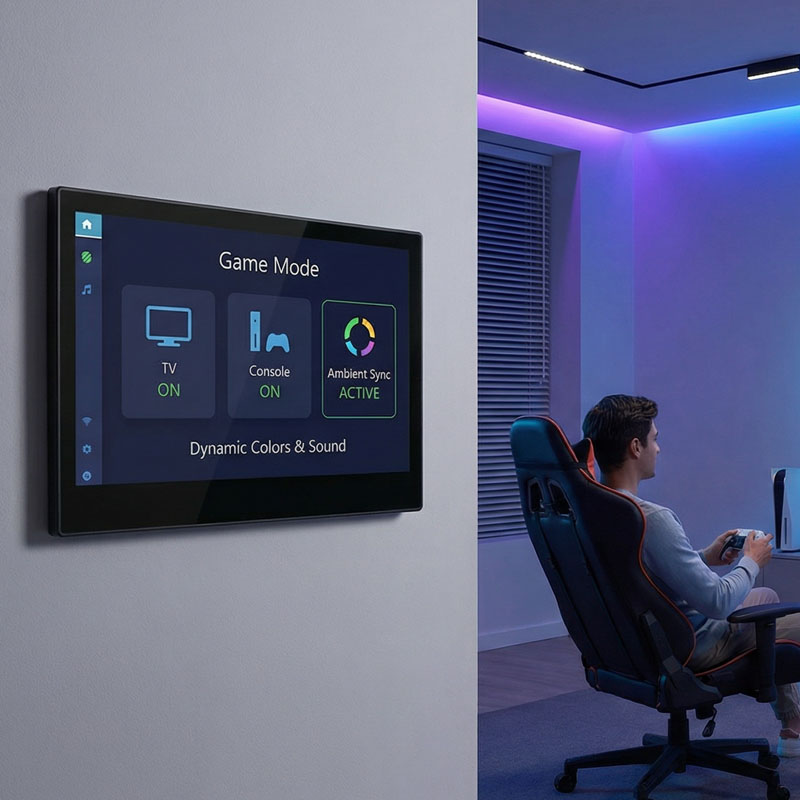
YC-SM116P 11.6 inch Smart Home Automation Touch Control
4. Cost: RK3568 vs RK3566
RK3568:
Given the enhanced performance and additional features (such as the advanced GPU and NPU), the RK3568 comes at a higher price point. For businesses developing premium smart panels with AI functionality or high-end displays, the RK3568 justifies its cost with better overall performance and capabilities.
RK3566:
The RK3566 is more affordable, making it a cost-effective solution for mid-range smart panels. It offers excellent value for applications like basic smart home panels, simple digital signage, and interactive kiosks where the primary focus is on functionality rather than high-performance requirements.
Verdict:
If you’re working within a budget or developing low-to-mid-tier smart panels, the RK3566 offers the best price-to-performance ratio. The RK3568, on the other hand, is better for premium solutions where performance is key.
5. Ideal Applications for Each Processor
RK3568:
- AI-based Smart Panels (facial recognition, voice commands)
- Commercial Digital Signage (advanced visual effects, real-time content updates)
- Smart Home Hubs with high graphical and processing demands
- Industrial Control Panels requiring high-speed, AI-driven analytics
RK3566:
- Basic Smart Home Panels (lighting, HVAC, security control)
- Simple Digital Signage (static or dynamic content display)
- Interactive Kiosks with moderate AI interaction
- Smart Hotel Panels (room control, basic automation)

smart control panel
Choosing Between RK3568 and RK3566 for Smart Panels
In the world of smart panels, both the RK3568 and RK3566 offer great features, but their suitability depends on the complexity of the application.
- If you need high-end AI functionality, advanced graphical performance, and the ability to handle heavy data processing and real-time interactions, the RK3568 is the best fit.
- If your project focuses on cost-efficiency, lower power consumption, and basic functionality, the RK3566 is the perfect choice.
Ultimately, both processors bring Rockchip’s powerful technology to the table, enabling smart panels that cater to a wide range of industries, from smart homes to industrial automation.